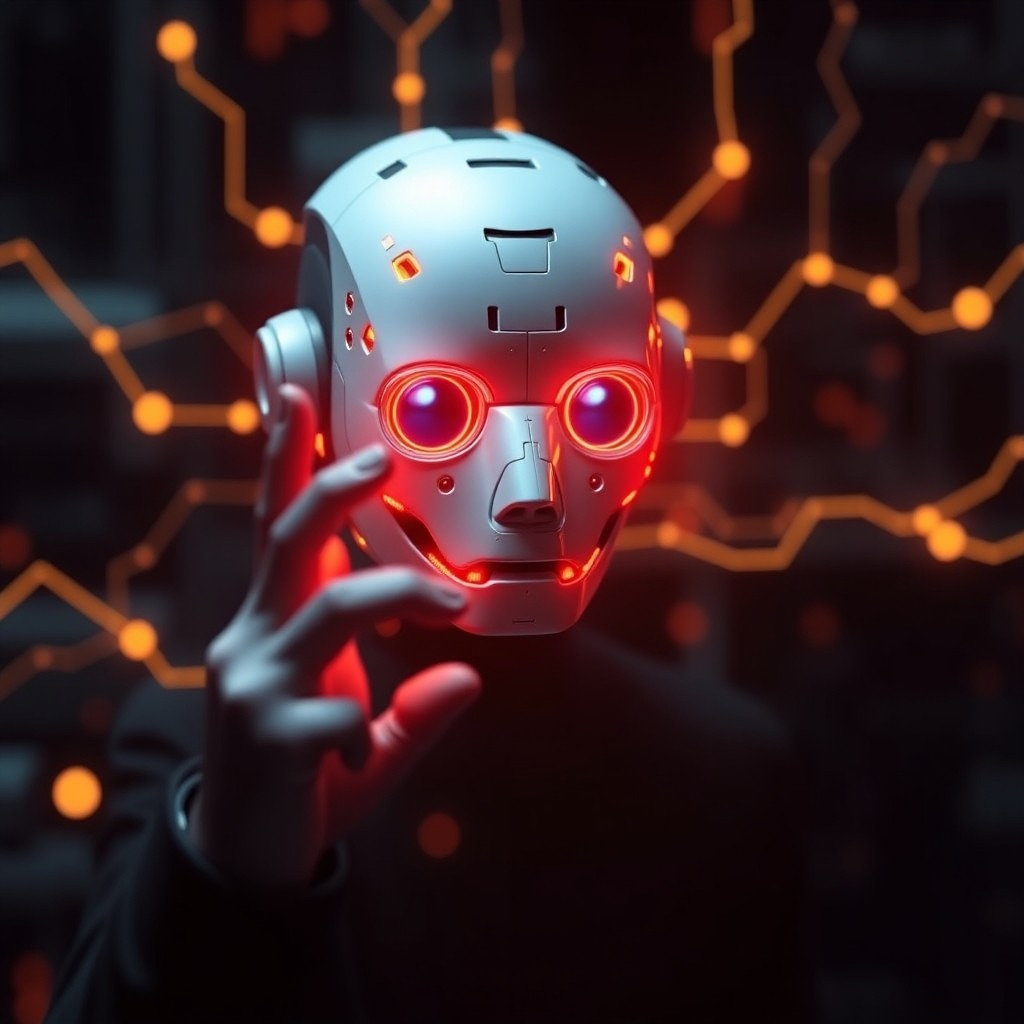
The Rise of AI in Content Creation: A Deep Dive
Sure, here’s a blog post about AI-powered content creation, designed to be inline:
The AI Revolution in Content Creation: Unleashing New Possibilities
Artificial intelligence (AI) is no longer a futuristic concept; it’s a tangible force reshaping industries, and content creation is at the forefront of this transformation. From crafting compelling narratives to generating stunning visuals, AI is empowering creators with unprecedented tools and opening up new frontiers of creativity and efficiency. This blog post dives deep into the latest trends in AI-powered content creation, exploring its capabilities, its impact on the digital landscape, and what the future holds.
Generative Text Models: The Art of AI-Written Words
At the heart of AI-powered content creation lies the remarkable advancement of generative text models. These sophisticated AI systems, like GPT-3 and its successors, are trained on vast datasets of text and code, enabling them to understand and generate human-like text with astonishing fluency.
What can these models do?
- Blog Post and Article Generation: Need a quick draft for a blog post or an informative article? AI can churn out well-structured content, providing a solid foundation for writers to refine and personalize.
- Creative Writing: From poems and scripts to marketing copy and social media updates, generative text models can assist in brainstorming ideas, overcoming writer’s block, and even producing complete pieces of creative writing.
- Summarization and Rewriting: AI can efficiently summarize lengthy documents or rephrase existing content to suit different audiences or platforms, saving valuable time.
- Translation: Real-time, high-quality translation is becoming increasingly accessible, breaking down language barriers in content dissemination.
The ability of these models to mimic human writing styles, adapt to different tones, and even generate code has made them invaluable assets for content creators, marketers, and businesses alike.
AI-Driven Image and Video Production: Visualizing the Future
Beyond text, AI is revolutionizing the visual content landscape with its prowess in image and video generation and manipulation.
Image Generation:
Tools powered by models like DALL-E 2, Midjourney, and Stable Diffusion can create unique images from simple text prompts. This means you can describe a scene, an object, or an abstract concept, and the AI will generate a corresponding visual.
- Illustrations and Graphics: Businesses can generate custom illustrations for websites, marketing materials, or presentations without the need for extensive graphic design resources.
- Concept Art and Prototyping: Designers and artists can quickly visualize ideas and concepts, speeding up the ideation and prototyping phases.
- Personalized Visuals: AI can generate images tailored to specific user preferences or campaign themes.
Video Production:
While still evolving, AI is making significant inroads in video creation and editing.
- AI-Powered Video Editors: These tools can automate tasks like scene selection, color correction, and even adding music and voiceovers.
- Text-to-Video Generation: Emerging technologies are beginning to allow users to create short video clips from text descriptions.
- Virtual Avatars and Presenters: AI can create realistic or stylized avatars that can deliver spoken content, offering a cost-effective alternative to live presenters for training videos or marketing messages.
The integration of AI in visual content creation is democratizing access to high-quality imagery and video, enabling creators to produce more engaging and dynamic content than ever before.
Transforming the Digital Landscape: Empowering Creators
The impact of AI on content creation extends far beyond the tools themselves; it’s fundamentally transforming the digital landscape and empowering creators in several key ways:
Optimizing Workflows:
AI automates repetitive and time-consuming tasks, freeing up creators to focus on higher-level strategy, creativity, and refinement. This leads to:
- Increased Efficiency: Faster content production cycles.
- Reduced Costs: Lower reliance on specialized human resources for certain tasks.
- Scalability: The ability to produce content at a larger scale to meet growing demands.
Enhancing Creativity:
AI acts as a powerful co-pilot for creators, offering:
- Idea Generation: Overcoming creative blocks and exploring new angles.
- Content Augmentation: Enhancing existing content with AI-generated elements or suggestions.
- Personalization at Scale: Tailoring content to individual user preferences and behaviors.
Personalizing User Experiences:
AI’s ability to analyze data and understand user behavior allows for highly personalized content delivery. This includes:
- Recommendation Engines: Suggesting relevant articles, products, or videos.
- Dynamic Content: Adapting website content or marketing messages based on user profiles.
- Personalized Email Campaigns: Crafting unique messages for individual subscribers.
This hyper-personalization leads to increased engagement, higher conversion rates, and a more satisfying user experience.
Ethical Considerations and the Road Ahead
As AI becomes more integrated into content creation, it’s crucial to address the ethical implications:
- Authenticity and Transparency: Clearly disclosing when content is AI-generated is essential to maintain trust with audiences.
- Bias in AI: AI models can inherit biases from the data they are trained on, leading to potentially discriminatory or unfair content. Ongoing efforts are needed to mitigate these biases.
- Copyright and Ownership: Questions surrounding the ownership of AI-generated content are still being debated and will require legal and industry frameworks.
- The Role of the Human Creator: AI is a tool, not a replacement for human creativity, critical thinking, and emotional intelligence. The future likely involves a symbiotic relationship between humans and AI, where AI augments human capabilities.
The future of AI in content creation is incredibly promising. We can expect:
- More Sophisticated Models: AI will become even better at understanding context, nuance, and complex creative tasks.
- Seamless Integration: AI tools will be more deeply embedded into existing creative workflows and platforms.
- Democratization of Creativity: Advanced creative tools will become more accessible to a wider range of individuals and businesses.
The AI revolution in content creation is not just about efficiency; it’s about unlocking new forms of expression, enhancing human creativity, and building more engaging and personalized digital experiences. As we navigate this exciting new era, embracing AI as a collaborative partner will be key to shaping the future of content.